How to document and explain your IBS for the best medical care.
Why The BRAT Diet May Not Be The Best Choice For Digestive Discomfort
March 25, 2019
What was once considered the gold standard diet for treating stomach upset may actually exacerbate your symptoms!
The BRAT diet may not be what the Dietitian orders for digestion issues anymore…
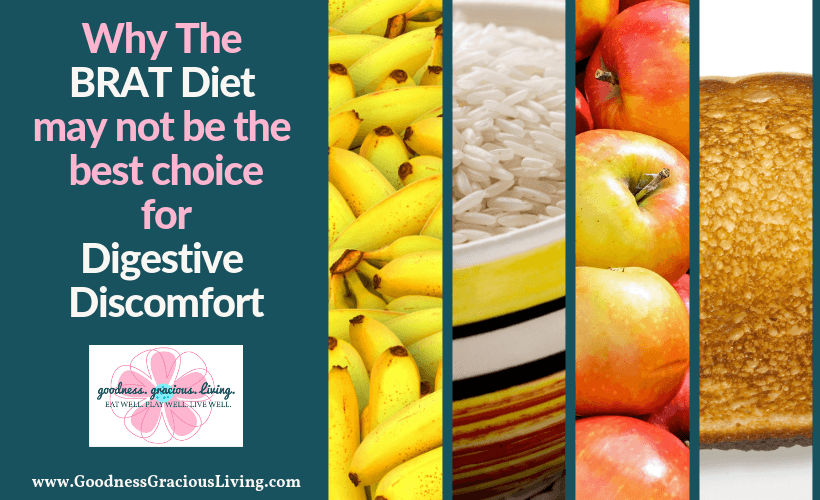
The BRAT diet – a diet consisting of Bananas, Rice, Applesauce, and Toast – was once prescribed by doctors to settle the stomachs of those suffering from gastroenteritis or any stomach upset or case of diarrhea. The BRAT diet first came into popularity in the 1920s but has not been widely studied for its safety or its efficacy. These particular foods were recommended because it was believed that foods low in fiber would slow transit time in the gut and bulk up stool. While there is very little research that proves that the BRAT diet is safe and effective, it is widely known that restricting your intake to only four foods will limit your intake of energy (aka calories), fat, and protein, and can lead to a nutrient deficiency of B12, calcium, and fat-soluble vitamins such as A and E if adhered to for more than a few days.
There are a number of causes of gastroenteritis, but gastroenteritis itself can trigger the chronic illness, Irritable Bowel Syndrome (IBS). Incidences of Post-Infectious Irritable Bowel Syndrome (PI_IBS) occurring are between 5-32%. Should PI-IBS develop, the BRAT diet may exacerbate symptoms such as stomach cramping and diarrhea.
Foods that contain certain forms of sugars and fibers that either draw water into the gut or are fermented by our gut bacteria will result in abdominal cramping and pain, gas, bloating, constipation and/or diarrhea for those with IBS and PI-IBS. These foods are called high-FODMAP foods (fermentable oligo-, di-, and monosaccharides and polyols). Bananas, applesauce, and toast are all high in FODMAPs. When high-FODMAP foods are eaten regularly, it can trigger an IBS symptom flare, extend the length and discomfort of a flare and lead to chronic inflammation of the gut and an alteration in the balance of our gut flora for by the majority of those with an IBS diagnosis.
While it might feel good to eat a bland diet that is low in fiber while experiencing digestive discomfort, consuming the foods on the BRAT diet may not be appropriate for you. It is recommended that you continue to eat all the foods that you can tolerate while you are experiencing symptoms. If you notice that your symptoms are not easing, it may be beneficial for you to go on the low-FODMAP diet. A Registered Dietitian with expertise in gut health and the nuances of the low-FODMAP diet will give you the best chance for success. To determine if your symptoms are being caused by IBS, seek out a diagnosis from a Gastroenterologist.
If you are looking to incorporate low-FODMAP foods into your diet, you often have gut health, IBS or SIBO issues that you would like to resolve. You can take charge of your health: Start by being ready with your gut health story! Download this free template and have all of your gut health information in one place so that your doctors know the whole story, and you can get diagnosed and treated quickly. Click here to grab your copy today and get the support you need to become symptom-free.

Beth Rosen
Eating Attitudes™ & Gut Expert
Beth Rosen, MS, RD, CDN is a Registered Dietitian and owner of Beth Rosen Nutrition. She practices a non-diet philosophy and is a Health at Every Size" practitioner. Her goal is to end the pain of diet culture, one person at a time. Beth's techniques and programs empower chronic dieters, and those who consider themselves emotional and /or stress eaters, to ditch the vicious cycle of dieting, eat fearlessly by removing Food and diet rules, and mend their relationship with food and their bodies. Beth's works face-to-face with clients in Southbury, CT, and virtually with clients, worldwide.