How to document and explain your IBS for the best medical care.
Connecting To Our Roots Through Food: A Trip to the Lower East Side!
May 16, 2014
I don’t always want to volunteer to chaperone my kids’ field trips. Some are a far trip on a school bus, some are searching for bugs in the mud, so it’s not surprising that I may wait a few days before responding to an email from a teacher looking for volunteers. But when my son’s Confirmation teacher sent out the email looking for volunteers to take a trip to the Lower East Side of Manhattan, I responded immediately. Even though it was a far trip, it wouldn’t be on a school bus, and no mud would be involved. I had been looking forward to this trip ever since I saw the photos from the group that went the year prior, but I didn’t realize that this year would be different – the tour would be a food tour. We were going to explore life in early New York City when the Jews immigrated from Eastern Europe, along with some other groups that started on the Lower East Side before moving on.
We met at 7:30 am on a Sunday morning and traveled down in three cars. There were 10 students going… and 9 chaperones. It’s not that the kids couldn’t be trusted to walk in NYC appropriately – they were 13-15 year-olds so that wasn’t an issue. I guess I wasn’t the only parent who wanted to learn a little history, and the teacher let us all come along. We arrived on the Lower East Side around 9:15 am and made a bee line for the first coffee shop to make a bathroom run.
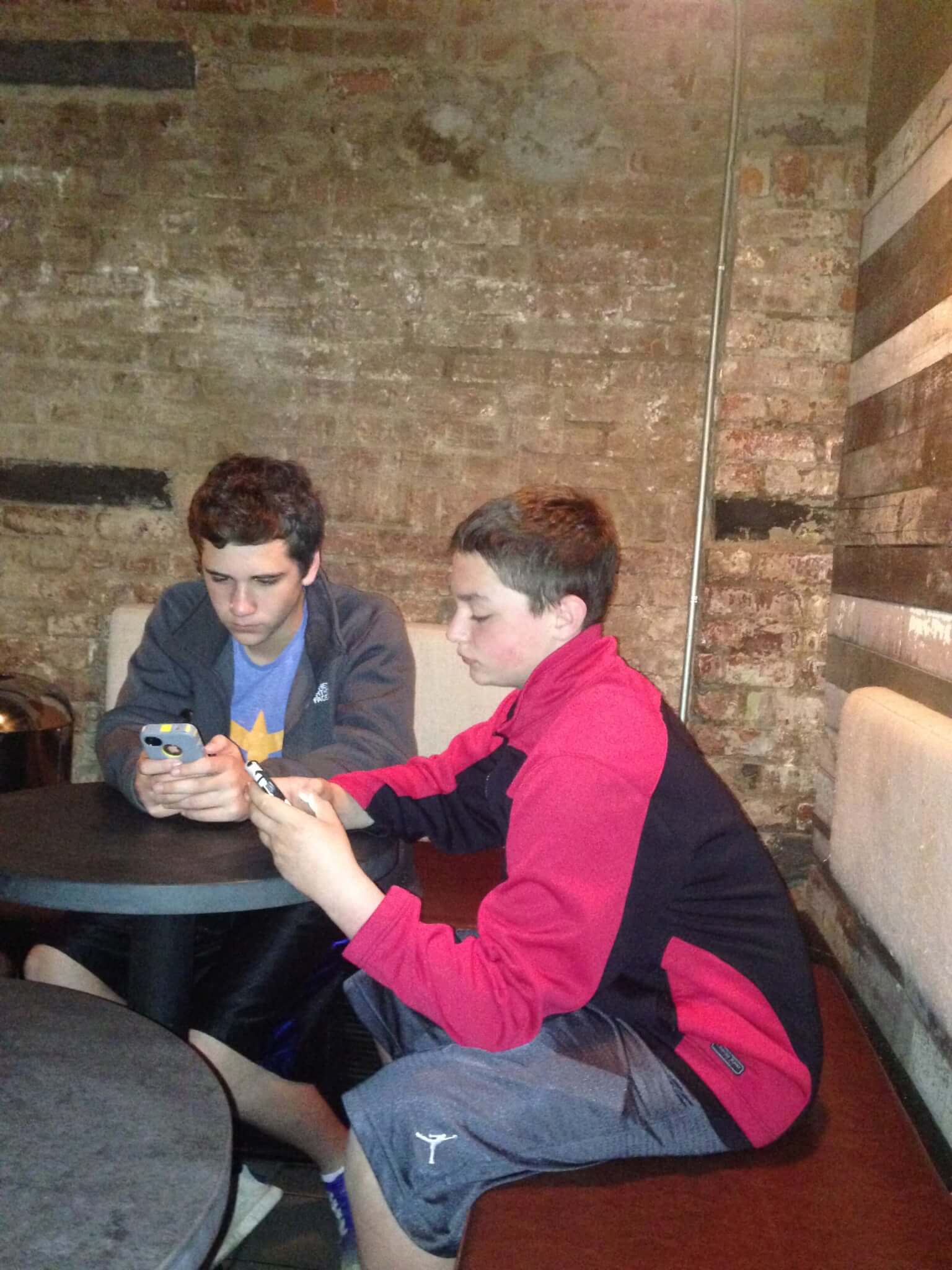
Checking phones (for the last time on this day) in a 100+ year-old building!
Then it was off to meet our guide in front of the Tenement Museum. I thought we were touring the museum, but no, we were walking the streets of the Lower East Side instead – Fun!
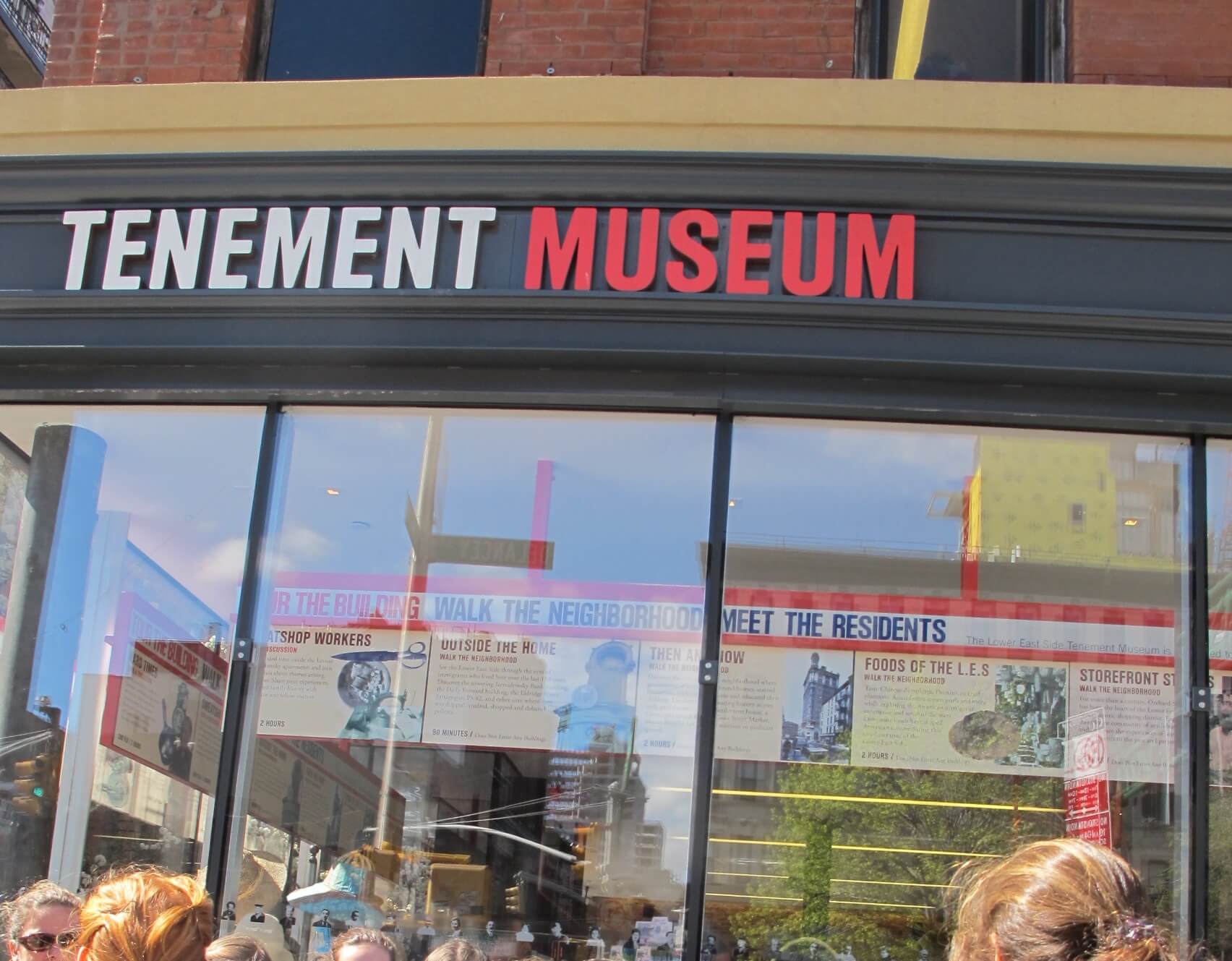
Outside the museum’s shop
The first stop was to stand and look down Orchard Street. It was pretty and empty. It was pretty empty. But not in the 1800s! It was the prime spot to have a push cart business. Vendors sold everything from pants to pickles. Speaking of pickles, we got to try some right then and there! The immigrants ate lots of pickles because they could be fermented and kept for the winter (just like I did last summer) and it was a cheap yet filling snack, which was a good thing for new Americans with not much money. But pickled cucumbers weren’t the only thing we tried; The Pickle Guys on Essex Street now pickle lots of other vegetables and fruit to keep their customers happy. We learned that adding new products to an ethnic menu was just one way that immigrants assimilated in order to attract other immigrants and native New Yorkers to their carts.
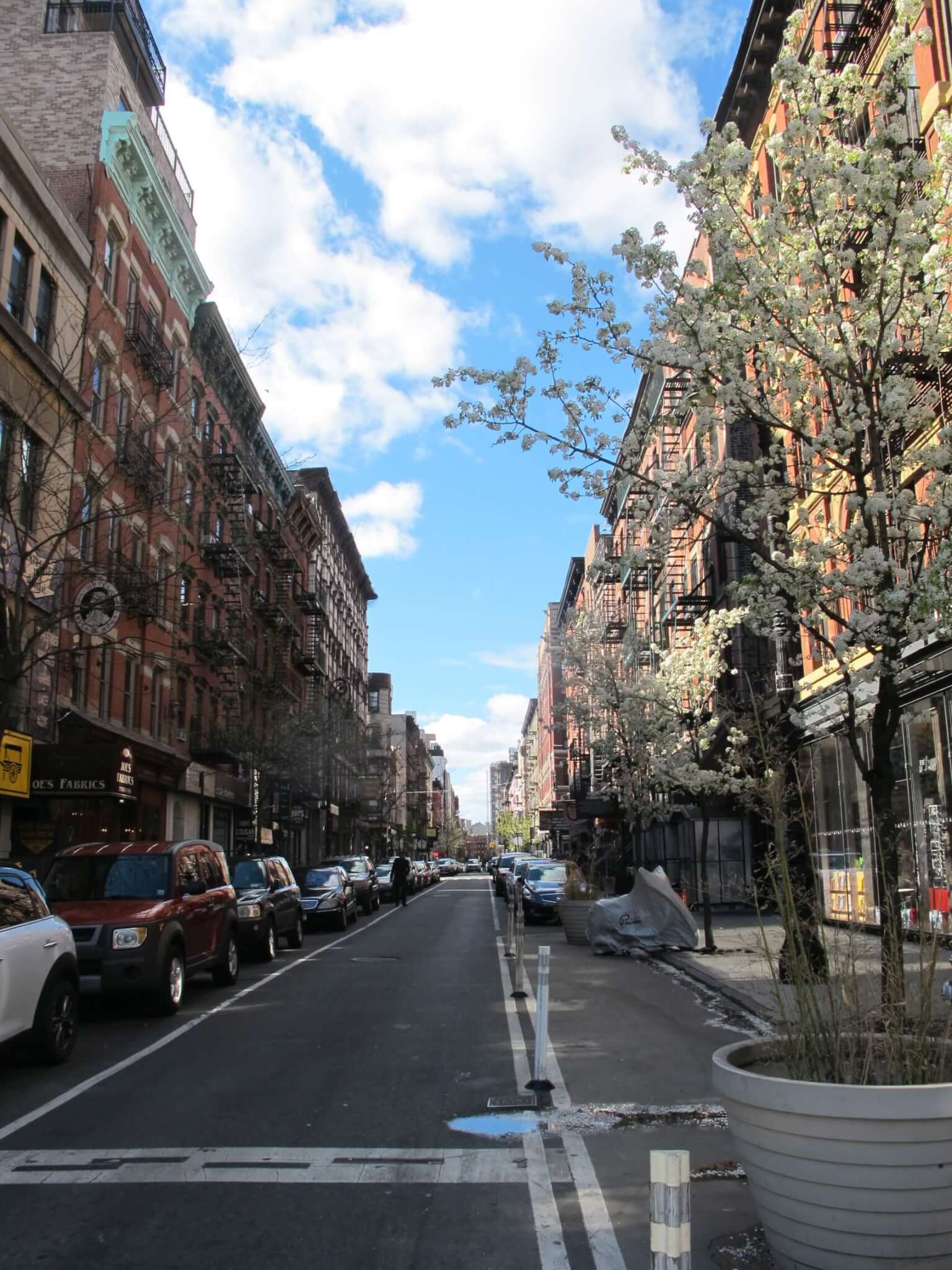
The pretty and empty Orchard Street.
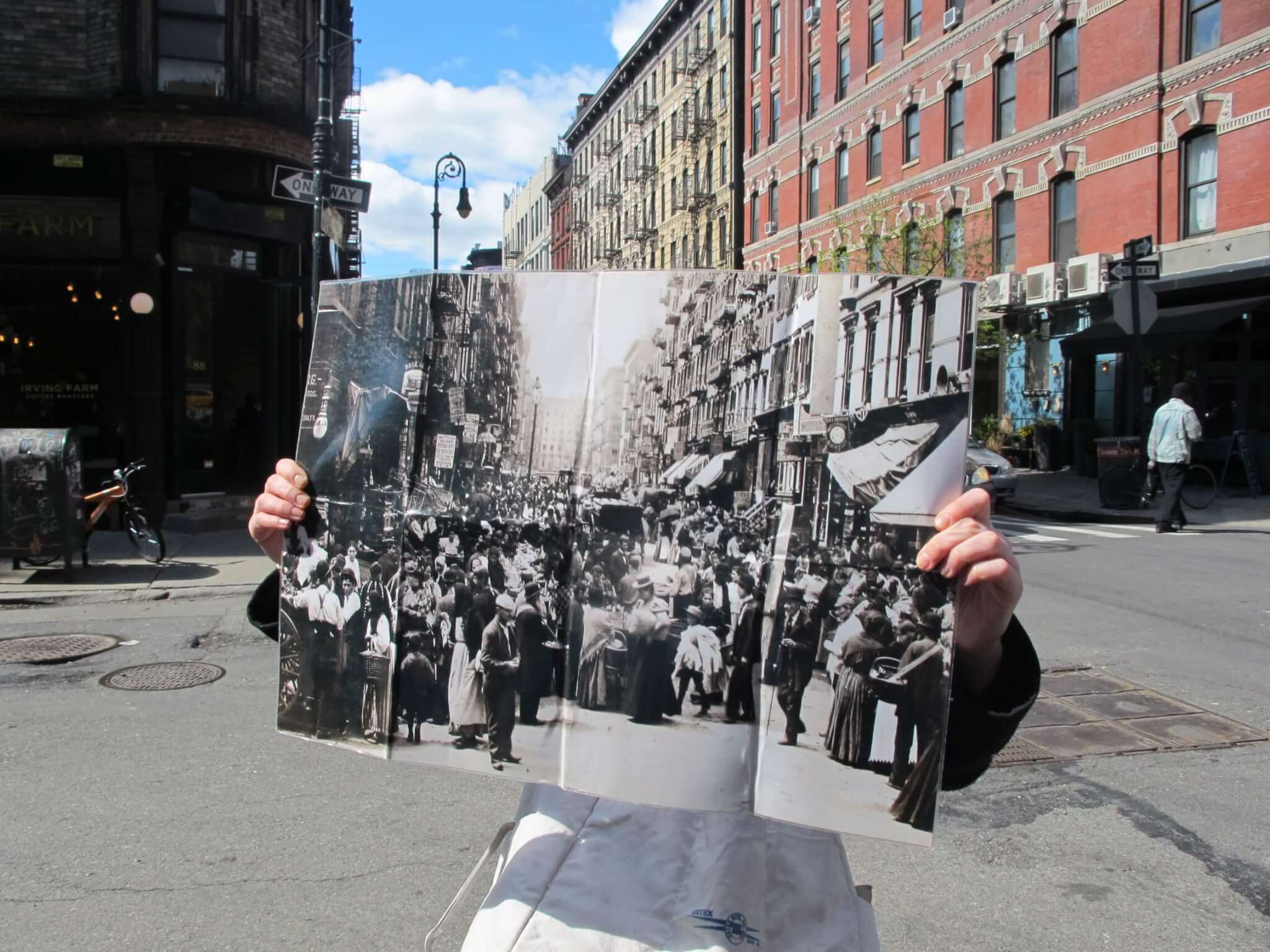
A photo of what it looked like back when my great grandparents arrived.
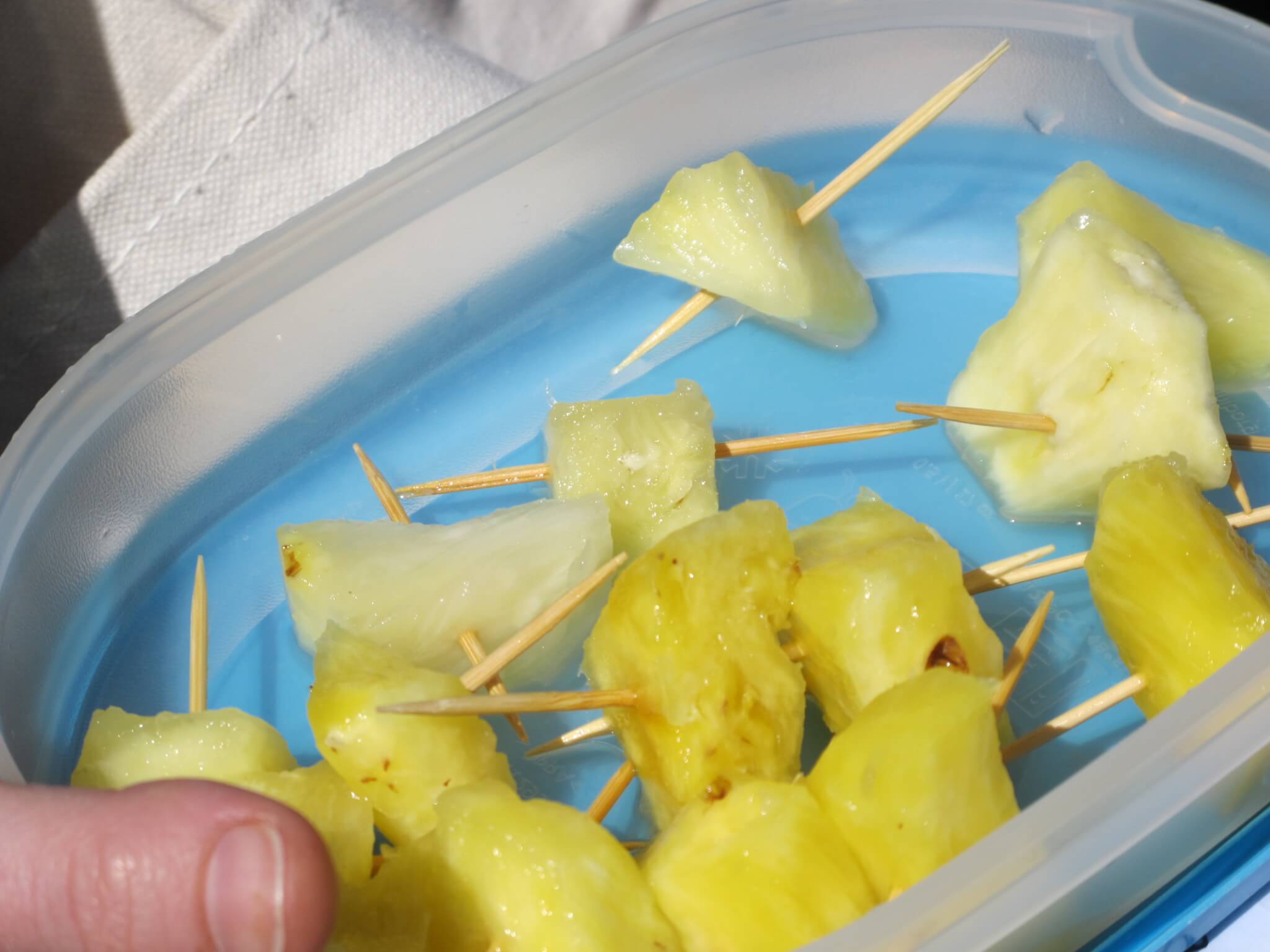
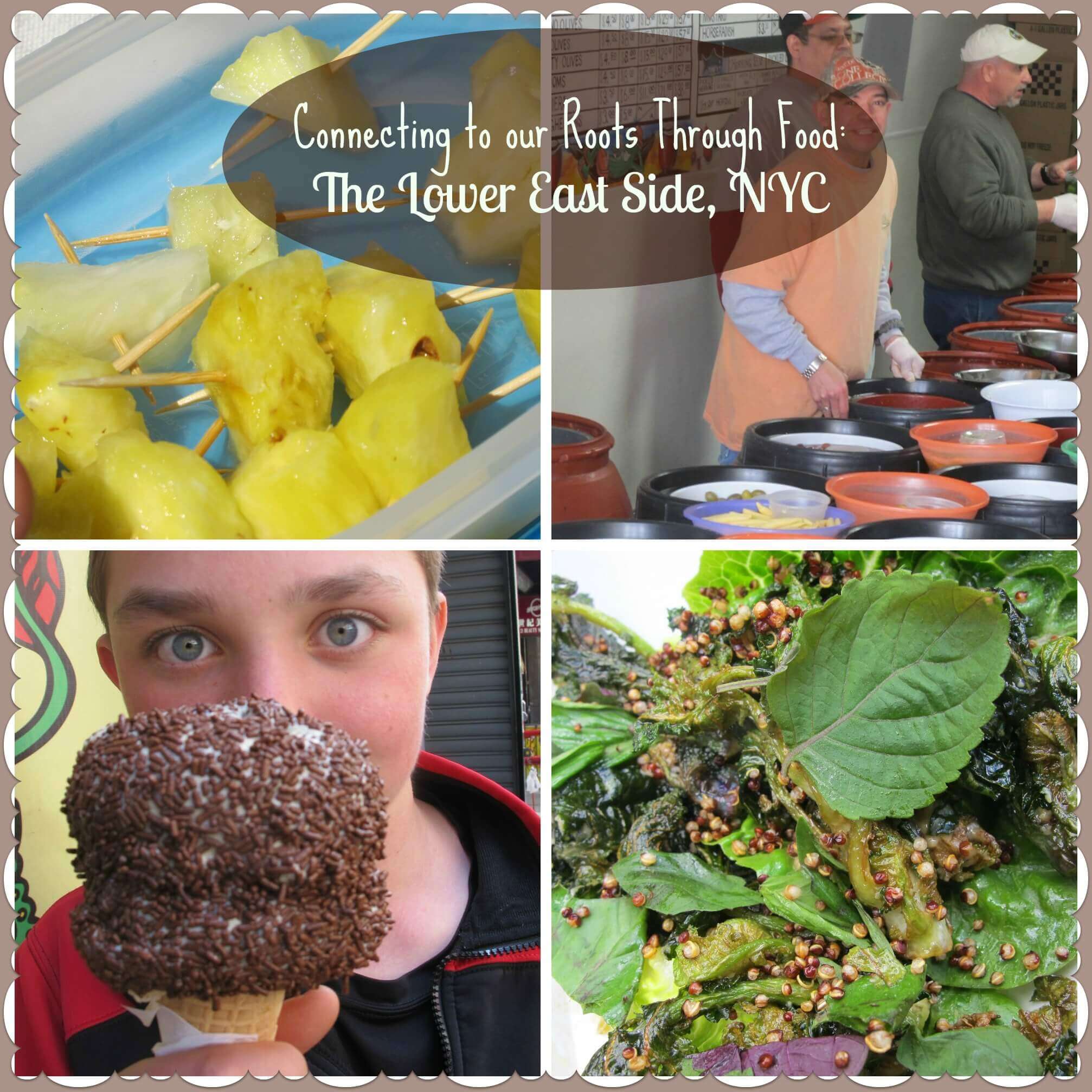
Yum, pickled pineapple! It had cloves and peppercorns in the brine.
After tasting a few varieties of pickles and some pineapple, it was off to another stop on the tour. This time, though, it was a Chinese immigrant who brought her dumpling goodness to NYC. Vanessa’s Dumpling House on Eldridge Street was a prime example of assimilation. She introduced her inexpensive (4 dumplings for a dollar!) and filling dumplings to the people of New York in 1999, but in order to get them in to try them, she had to put her menu and store sign in English so others would know what she was selling. And selling she has been! She now has three locations in NYC. My son was in heaven. He loved the dumplings and was the lucky kid in the group who had the mom who couldn’t eat hers, so he got seconds!
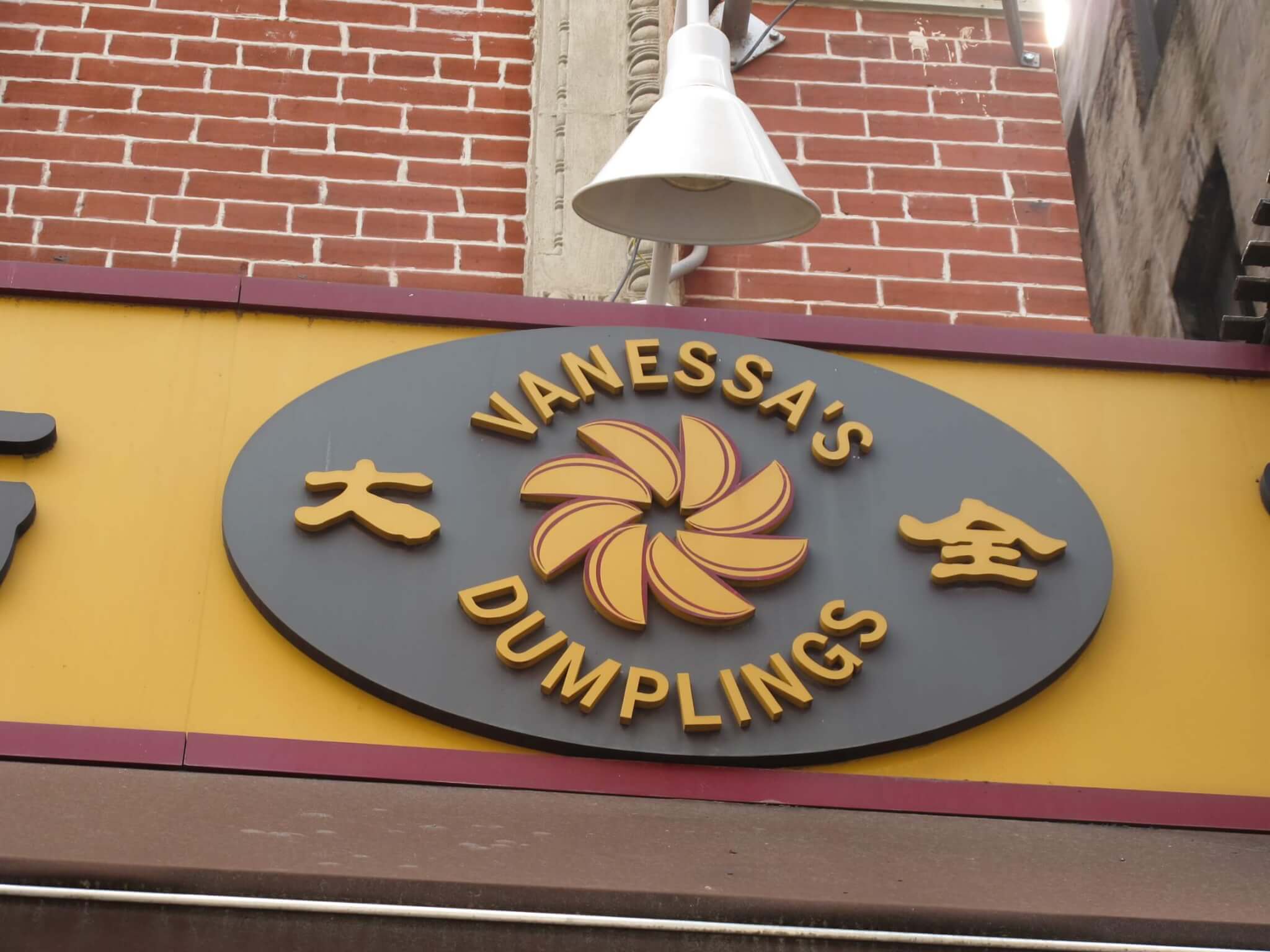
The Vanessa’s on Eldridge Street.
We made a few more stops and then we were on to the height of the tour for the kids (and for me!); Economy Candy! The store was originally Economy Shoes, but they sold candy there too. Soon, the candy became more profitable, so the shoes went out to make room for, you guessed it, more candy. Now it is owned by the 4th generation of the Cohen family and their business has expanded to the world wide web. Our tour guide told us that candy was considered “poison” by many back in those days, but it didn’t stop children from spending their hard-earned or found coins at the candy shop! Candy was a tool for being social because you could buy a lot with a little money and share it. The tour guide gave each person a chocolate covered pretzel (and again my son scored two). Even though I couldn’t eat it, later in the day we would head back to shop in Economy Candy. I bought $20 worth of candy and I wasn’t sharing.
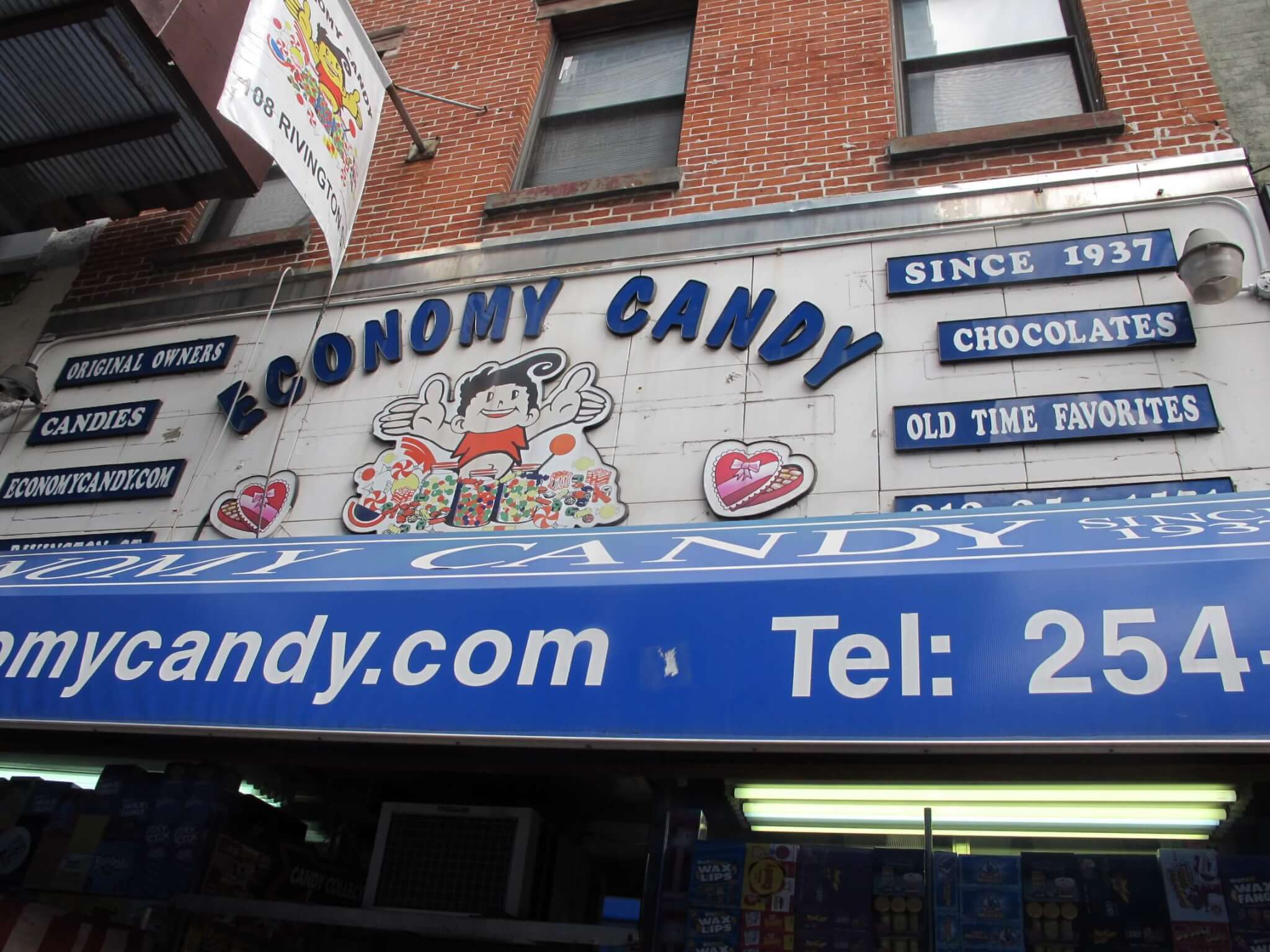
This place is literally floor to ceiling candy!
The last stop on our tour was to the Essex Street Retail Market. It was established when, in 1938, Mayor LaGuardia of New York banned push carts. Immigrants risked their livelihood, if not for this original “pop-up shop.” Currently, there are bakeries, cheese shops, butchers and even a mini supermarket (is that an oxymoron?) inside this windowless building. Here, the kids tried a few types of cheeses and jellied guava, introduced by the immigrants of modern times from the Dominican Republic.
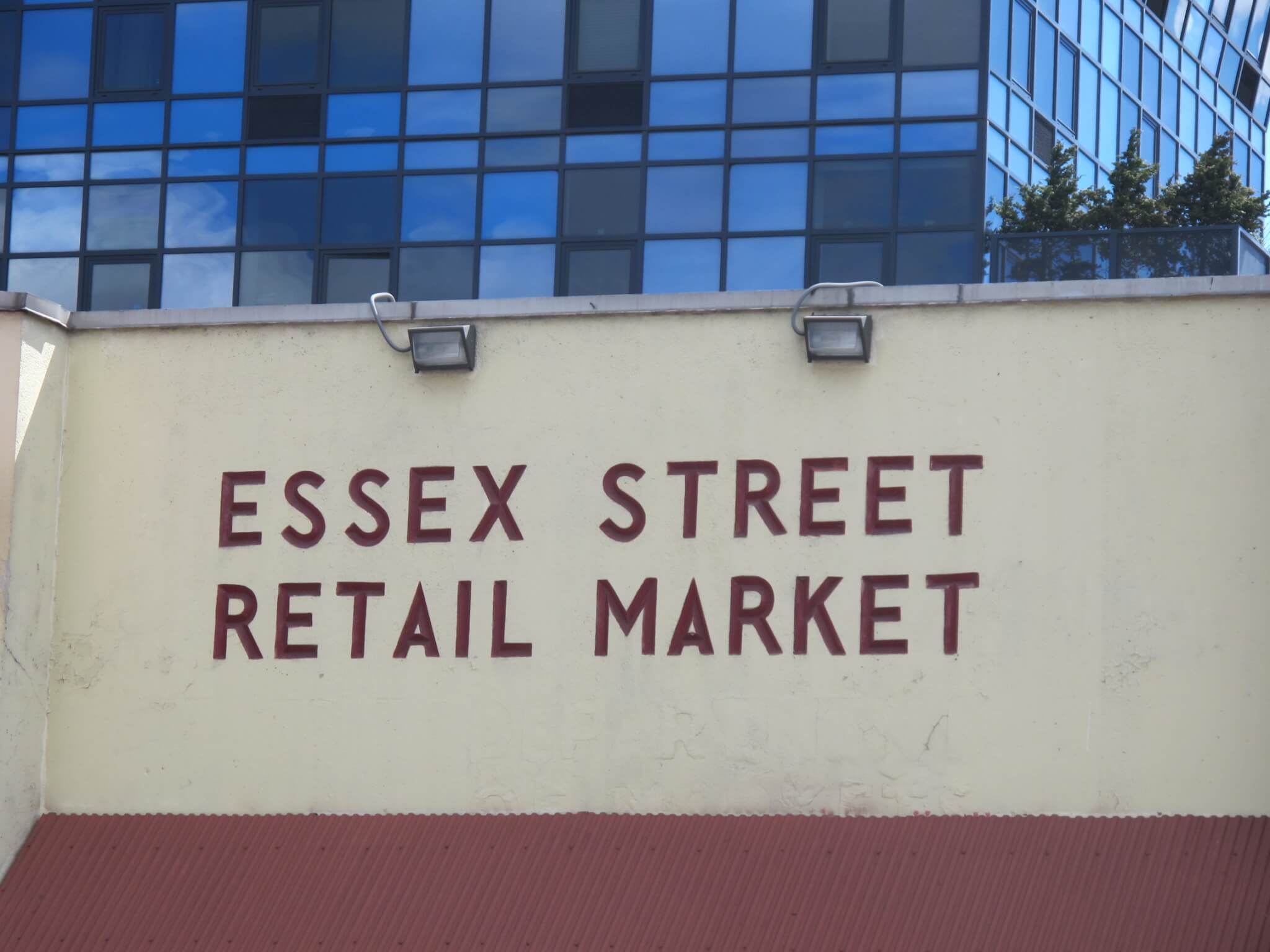
Established in 1940
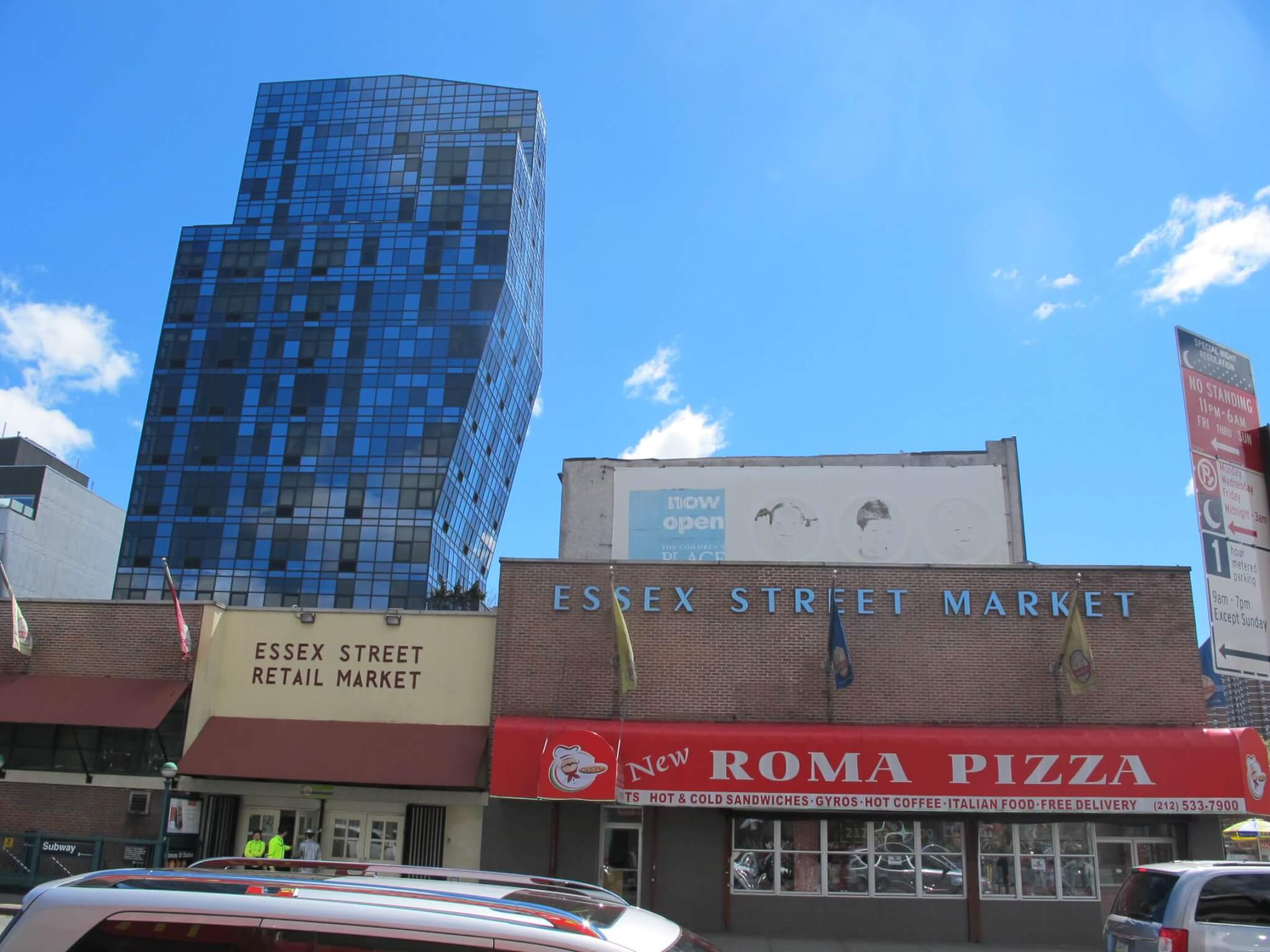
The Essex Street Market has a huge building directly behind it. Word has it that Leonardo DiCaprio owns the penthouse.
It was a wonderful end to a fabulous tour, but our trip did not end there. We took off on our own and made some other discoveries! Our first stop was the Hester Street Fair, next to Seward Park, which had many vendors, but most notably, food artisans. Time for me to eat!
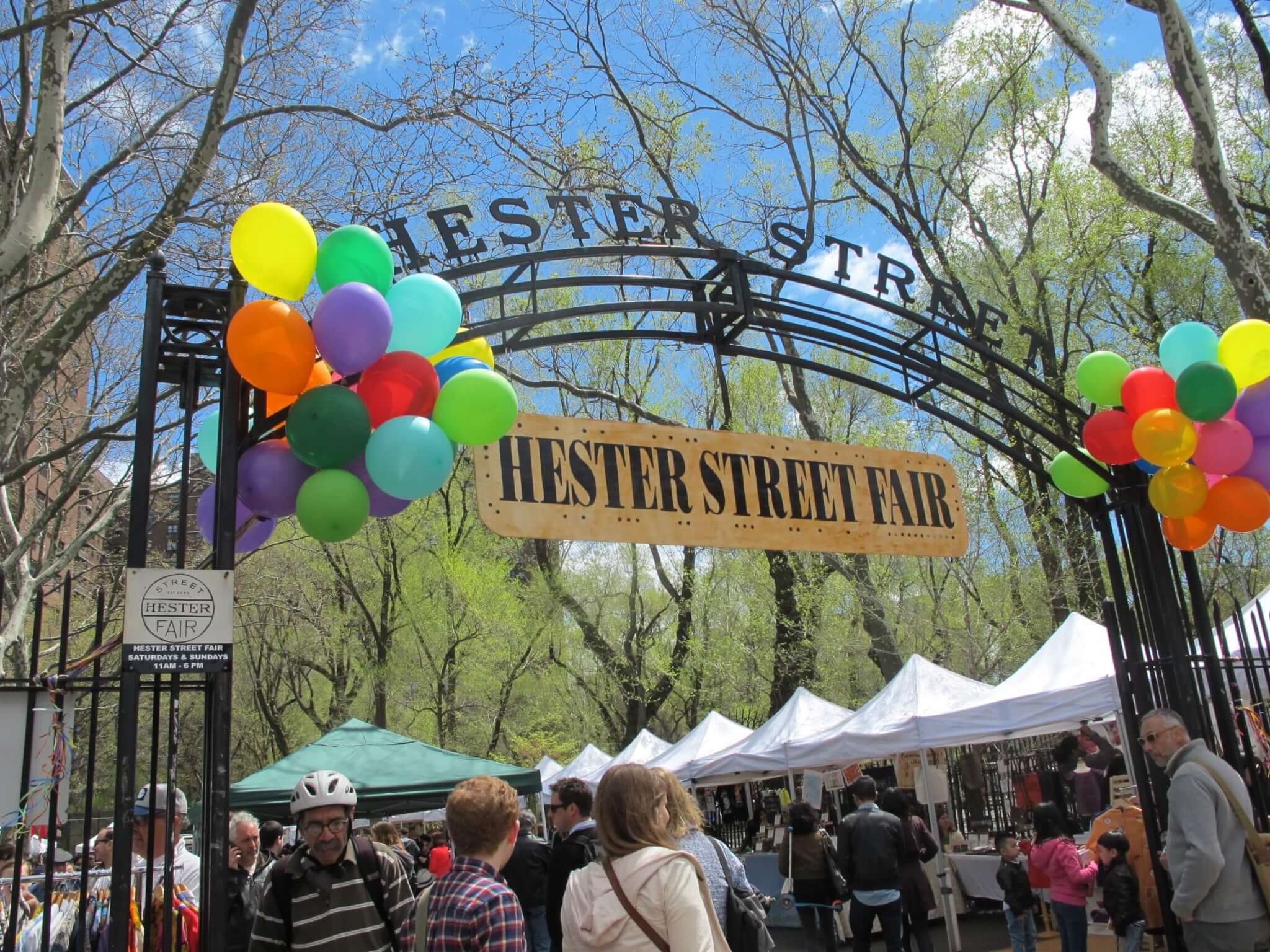
The Hester Street Fair is open Saturdays and Sundays from April through November
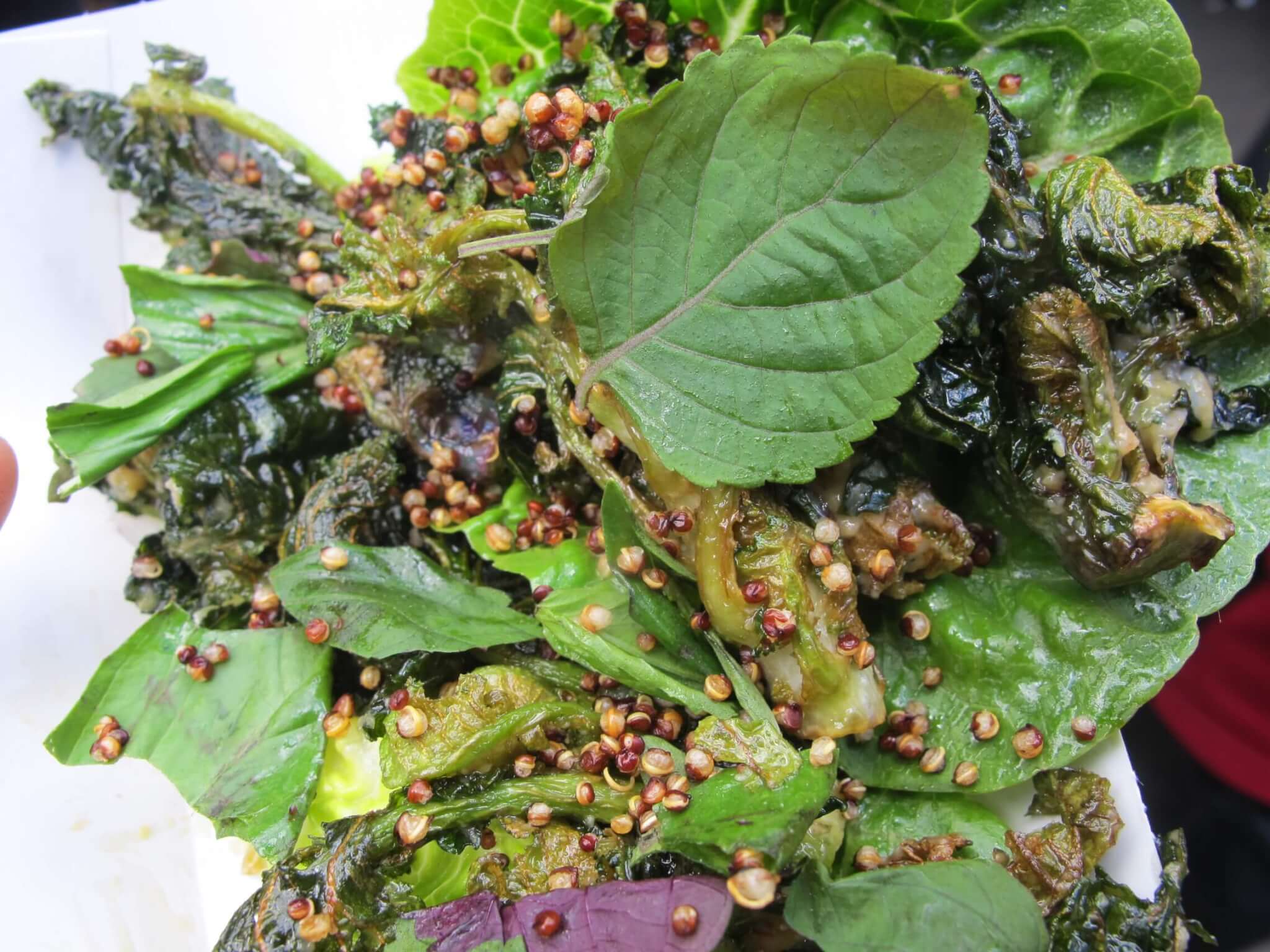
Kale and crunchy quinoa lettuce wraps – yum!
From there, we did some walking and passed a number of old synagogues. What was most interesting about these synagogues was that few are still houses of worship. One we passed was converted to a sculptor’s studio, and the sculptor currently lives on the top floor. Talk about inspiration!
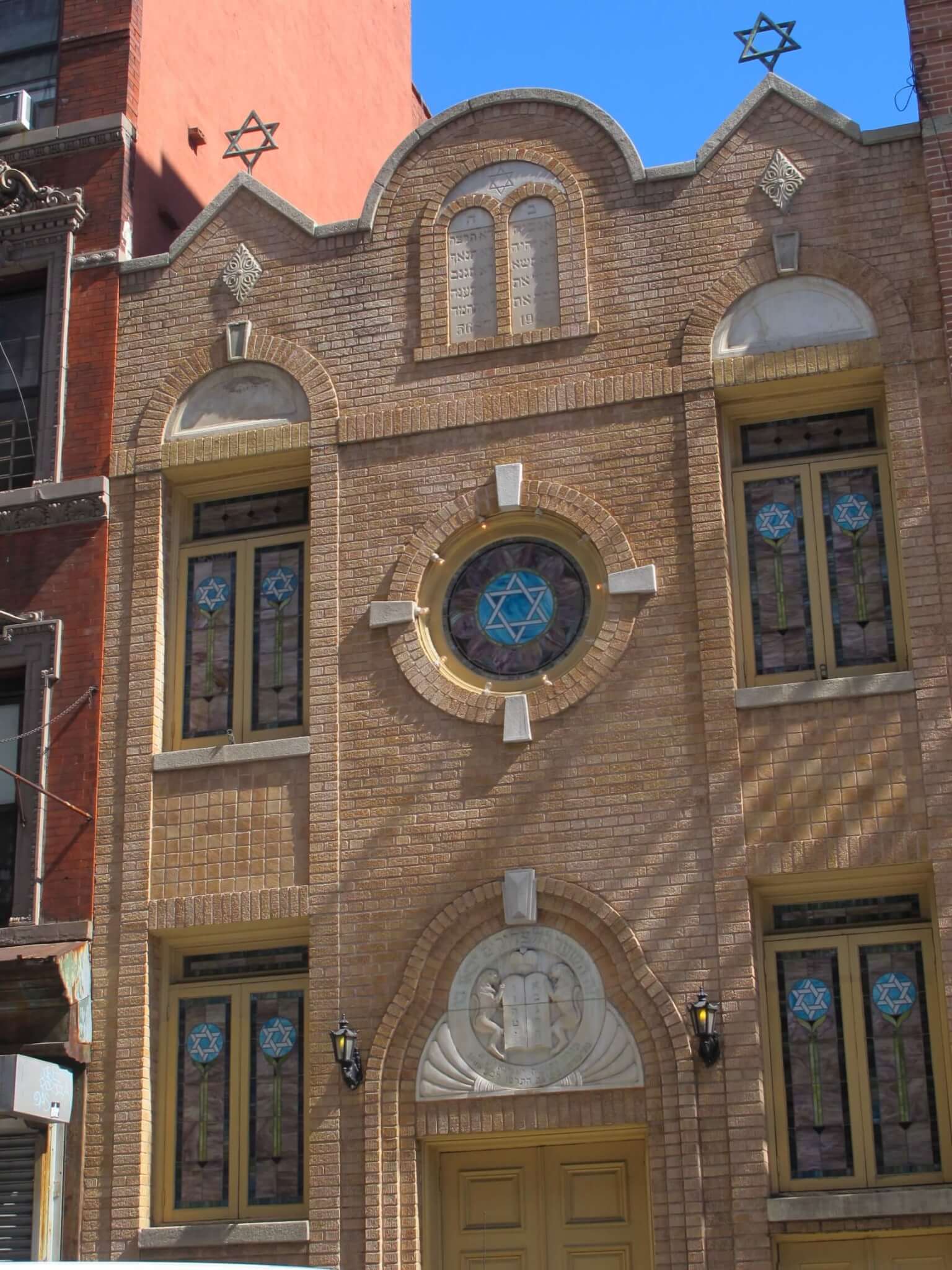
Still a place of worship.
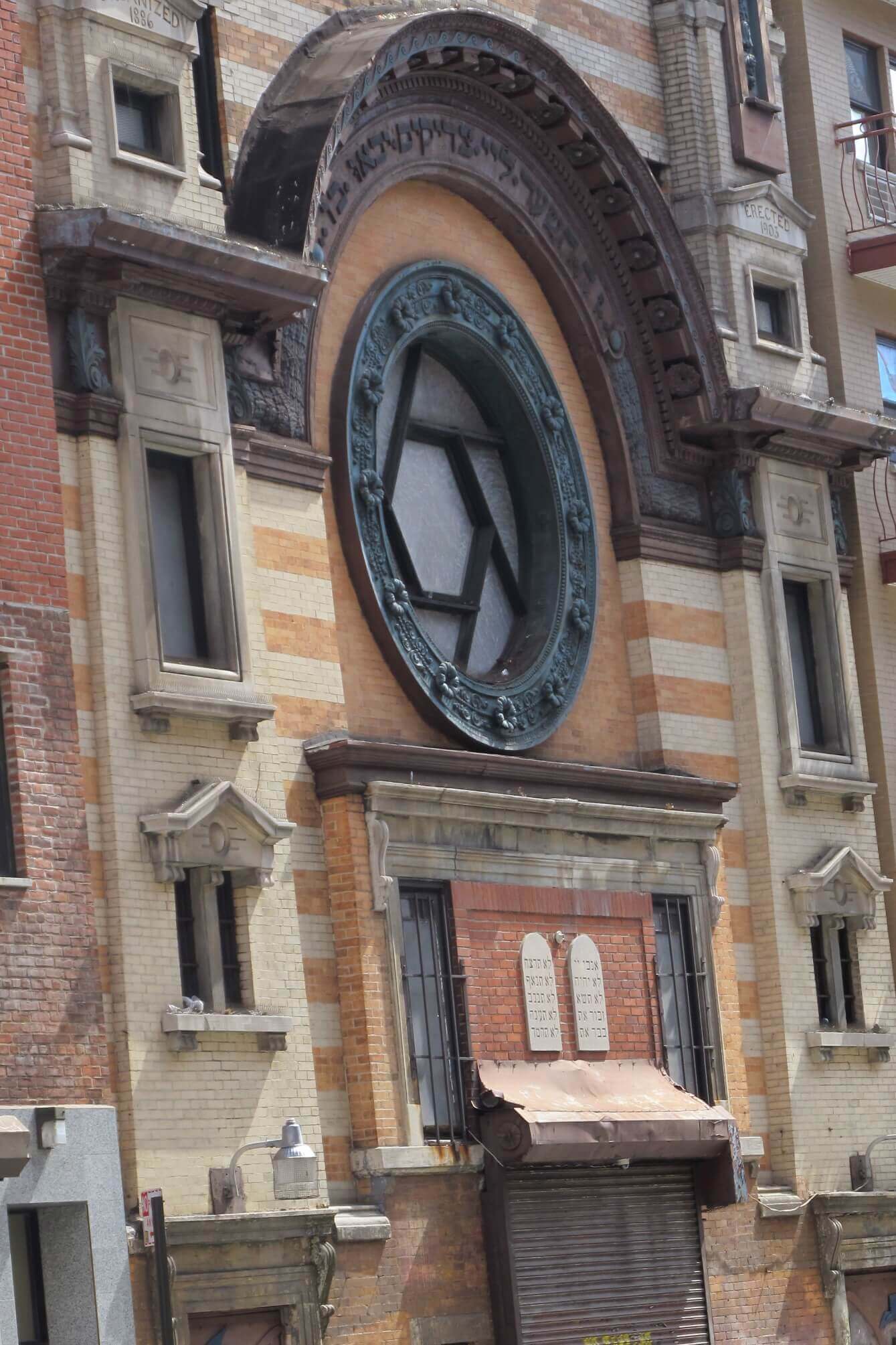
The synagogue turned artist’s home and studio.
Our religious school teacher took the reigns and veered us through another immigrant group’s part of town, Chinatown, on our way to the first Jewish cemetery. During the revolutionary war, the cemetery was used to hide guns and ammunition. Some of the headstones were still legible.
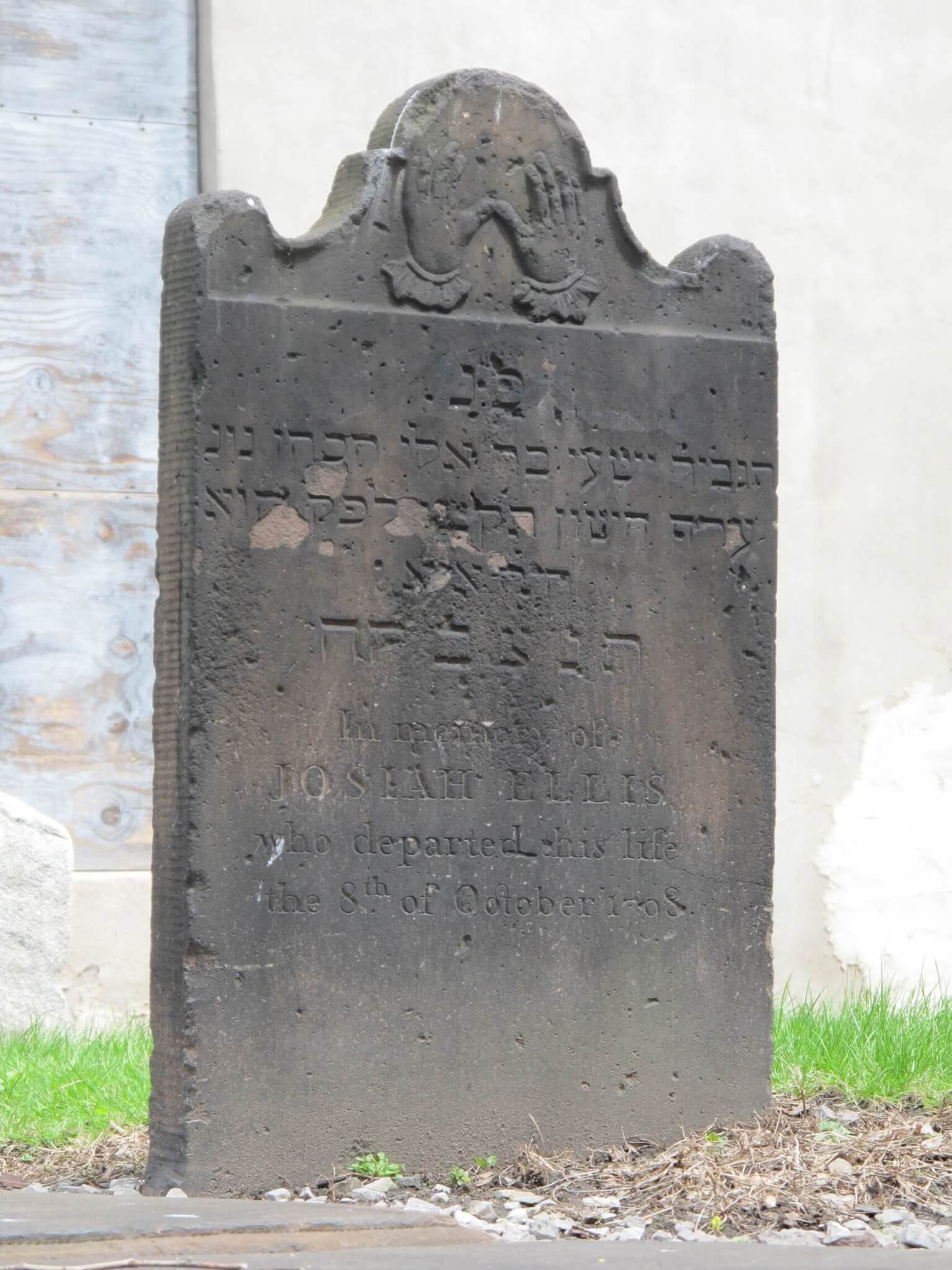
This headstone dates back to the 1700s.
From there, it was time to head back to the cars and we did so through the heart of Chinatown where there was, you guessed it, more food! The pit stop: The Chinatown Ice Cream Factory. This must be the epitome of assimilation; I don’t believe ice cream originated in China, but it is certainly a draw for immigrants and 4th generation New Yorkers like my boy.
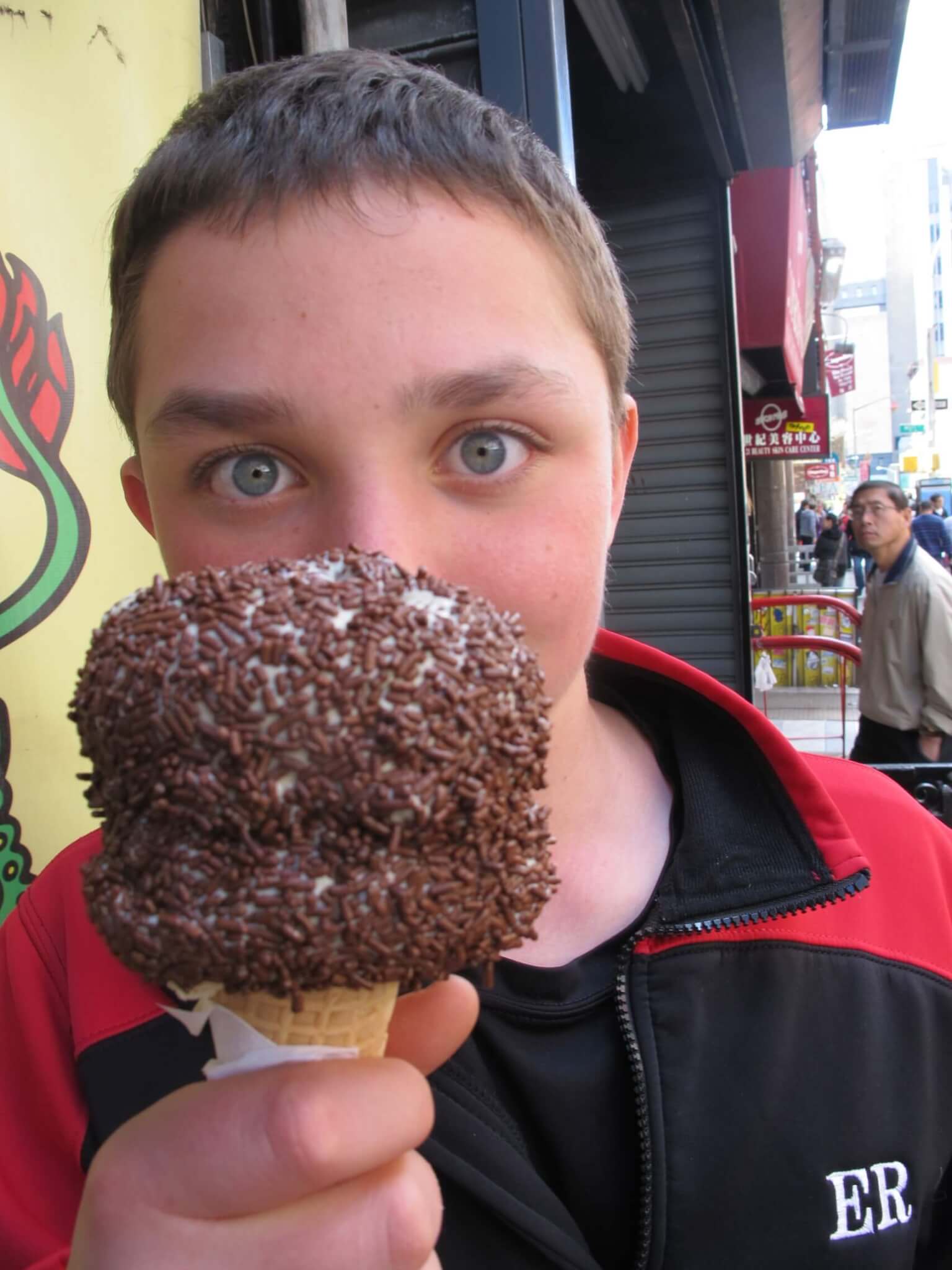
The ice cream is as big as my boy’s face!
Everyone was full of food and knowledge and ready for the drive home. We had a wonderful day exploring our roots and eating our way through the Lower East Side. I’m not sure who enjoyed themselves more – the students or the parents, but one thing is for sure: We are already planning our trip back, but next time, we are leaving the kids at home!
Tell me: What town do you like to explore through food?
xo
B

Beth Rosen
Eating Attitudes™ & Gut Expert
Beth Rosen, MS, RD, CDN is a Registered Dietitian and owner of Beth Rosen Nutrition. She practices a non-diet philosophy and is a Health at Every Size" practitioner. Her goal is to end the pain of diet culture, one person at a time. Beth's techniques and programs empower chronic dieters, and those who consider themselves emotional and /or stress eaters, to ditch the vicious cycle of dieting, eat fearlessly by removing Food and diet rules, and mend their relationship with food and their bodies. Beth's works face-to-face with clients in Southbury, CT, and virtually with clients, worldwide.