How to document and explain your IBS for the best medical care.

What are FODMAPs?
March 16, 2018
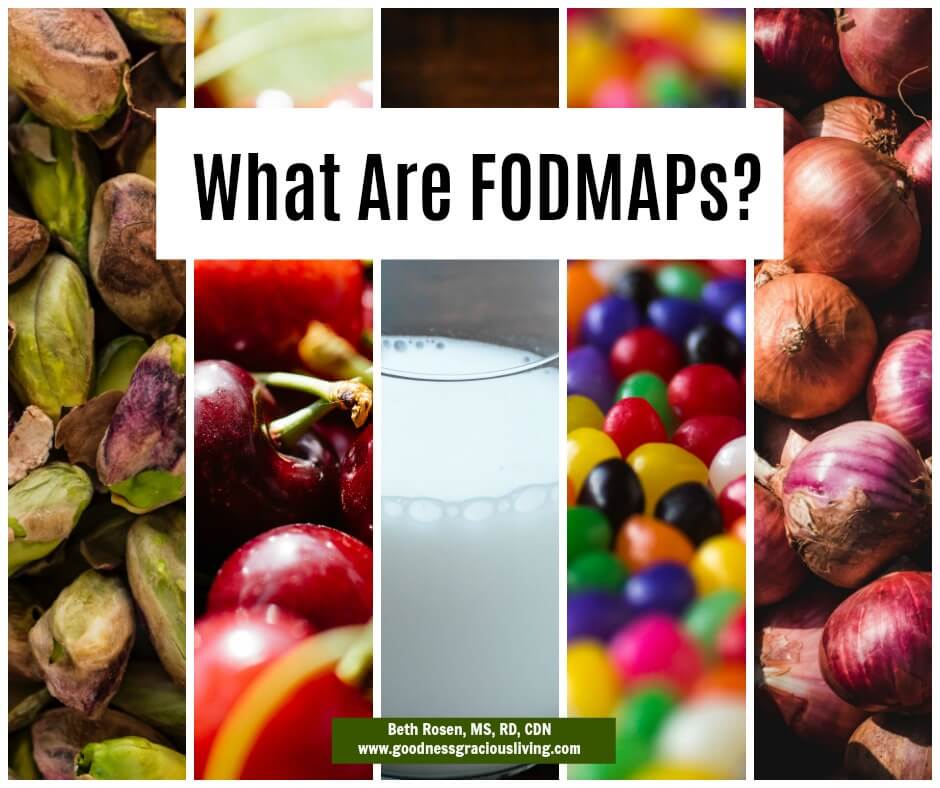
Over the past 10 years, researchers at Australia’s Monash University have discovered that some forms of carbohydrates cause gas, bloating, diarrhea, constipation, cramping, and the like for people with Irritable Bowel Syndrome (IBS). For many IBS sufferers, these carbohydrates are not digested in the small intestines and inevitably travel to the large intestines where they are fermented by the resident bacteria – our microbiome – and symptoms ensue. Many of my clients find relief from their IBS symptoms when they remove these troublesome carbohydrates from their eating patterns. Eating a diet low in fermentable carbohydrates – known as the low-FODMAP diet – ease these symptoms, but deciphering which carbohydrates ferment in the gut and which ones do not can be tricky (and the internet is full of misinformation!) The forms of carbohydrates that comprise the acronym, FODMAP, are as follows: Fermentable Oligosaccharides Disaccharides Monosaccharides and Polyols.
The low-FODMAP diet is followed for 2-6 weeks once you have a diagnosis of IBS*. After that time, foods are slowly reintroduced until all FODMAP triggers are determined; this helps to individualize and liberalize the eating pattern to include the nutrients missing from the elimination phase. This diet should be implemented by a Registered Dietitian, who is most qualified to disseminate the information and personalize it for your tastes and your symptoms.
Here is a primer on the low-FODMAP diet:
Oligosaccharides
Oligosaccharides are poorly absorbed, indigestible fibers called fructans and galactooligosaccharides (GOS). These are found in the following foods**:
- Wheat, rye, barley
- Beans, peas, and lentils
- Some vegetables – particularly onions and garlic
- Inulin (check the ingredients lists on your snacks!)
Disaccharides
Lactose is the main source of fermentable disaccharides. Malabsorption occurs in some ethnic populations, and by those who do not produce enough of the enzyme, lactase. Sources of disaccharides include the following foods**:
- Cow’s milk – all types, including skim
- Cottage cheese, yogurt, and ice cream
- Goat’s milk and products made from goat’s milk
Monosaccharides
The fermentable form of monosaccharides in the diet is fructose. This carbohydrate is present naturally in many fruits, as well as in honey. Fructose is easily absorbed when present in a 1:1 ratio with glucose. But, when the amount of fructose in the diet exceeds the amount of glucose, the excess fructose cannot be absorbed. Sources that contain excess fructose include the following foods**:
- Apples
- Honey
- Asparagus
- High fructose corn syrup
Polyols
Polyols are sugar alcohols. They can be found in some fruits and vegetables, and many reduced-calorie and sugar-free foods. Examples of sugar alcohols include sorbitol, xylitol, and mannitol. These carbohydrates are not only found in food, but also in breath mints, toothpaste, dietary supplements, and cold medicines. Additional sources of polyols include the following**:
- Stone fruits, such as peaches and plums
- Mushrooms
- Cauliflower
- Sugar-free candy
Limiting and/or avoiding foods containing high levels of FODMAPs can decrease the discomfort associated with IBS. It is important to note that not all foods will affect everyone in the same way. You will be able to determine your trigger foods during the reintroduction phase of the diet. Once you have determined all of your triggers, you will enter the maintenance phase of the diet. Most FODMAPers only have a few triggers and are able to have an expansive and varied food repertoire.
The low-FODMAP diet is science-based and has much research to back its efficacy, but it is still an evolving body of evidence. Because of this, following the low-FODMAP diet using a list of foods found on the internet that may contain current data will lead to inadvertent consumption of high-FODMAP foods or too large a portion of a food, resulting in a trigger or exacerbation of IBS symptoms. Finding a Registered Dietitian in your area who specializes in IBS and the low-FODMAP diet will yield the best results
If you want to learn more about the low-FODMAP diet, I have a free video training that explains 3 Strategies for Success with the Low-FODMAP Diet. You can click here to get instant access to this training, which can be very helpful to understand more of the why behind this specific diet for people with gut health issues.
*Do not start the low-FODMAP diet without a confirmed diagnosis. The symptoms of IBS can also be symptoms of other conditions and diseases. Seek out a diagnosis with a Gastroenterologist.
**This list is not comprehensive. For a comprehensive low-FODMAP food list, contact a Registered Dietitian.

Beth Rosen
Eating Attitudes™ & Gut Expert
Beth Rosen, MS, RD, CDN is a Registered Dietitian and owner of Beth Rosen Nutrition. She practices a non-diet philosophy and is a Health at Every Size" practitioner. Her goal is to end the pain of diet culture, one person at a time. Beth's techniques and programs empower chronic dieters, and those who consider themselves emotional and /or stress eaters, to ditch the vicious cycle of dieting, eat fearlessly by removing Food and diet rules, and mend their relationship with food and their bodies. Beth's works face-to-face with clients in Southbury, CT, and virtually with clients, worldwide.