How to document and explain your IBS for the best medical care.
Three Strategies to Manage Your Irritable Bowel Syndrome Symptoms During a Flare
March 18, 2019
Irritable Bowel Syndrome has no cure and symptom glares are par for the course but we can take steps to manage them.
Flares are a part of having Irritable Bowel Syndrome, but you can manage them in order to minimize pain and discomfort.

Irritable Bowel Syndrome (IBS) is currently a chronic disease with no cure. While we can feel well for a while, there is always a chance of experiencing a flare. A flare is a point in time where your symptoms – gas, bloating, abdominal pain, an urgency to move your bowels, fecal incontinence, diarrhea, and constipation, for example – appear, seemingly from out of nowhere. Flares can be triggered by a number of things, but they can also come on without provocation. Some flares can be managed through diet and behavioral changes, while others require self-care activities that may make you more comfortable as you ride them out. For some, fretting over the flare or the cause of the flare can exacerbate it, which is why it is so important to remember that you are not in total control of your IBS. Having compassion for yourself as you move through life with IBS can be one of the management tools you use during an IBS flare. Here are a few ways to manage your IBS symptoms during a flare.
Diet
The most researched dietary intervention currently showing the highest rate of effectiveness is the low-FODMAP diet. The low-FODMAP diet removes all fermentable carbohydrates from the diet for the elimination phase and then systematically adds them back to determine an individual’s trigger foods. Working with a Registered Dietitian to implement this dietary intervention will help you reduce an IBS flare caused by a trigger food that you may not have been aware of was the cause of the flare. If you have gone through the phases of the low-FODMAP diet and know your personal trigger foods and experience a flare, your symptoms may not be due to what you ate, but you can always use the elimination phase of the low-FODMAP diet as a source for a few meals until you are feeling better.
Sleep
Sleep disturbances are common for people with IBS. These disturbances can lead to an exacerbation of symptoms the following day including IBS-related pain and distress. Research has also shown that the disturbances can go beyond the gut to impact mood and increase pain levels. There are a number of ways you can work towards a better nights’ sleep:
- Get to bed at a reasonable hour. This may seem obvious, but making sleep a priority means allowing for at least eight hours of shut-eye before your alarm rings in the morning.
- Reduce brain stimuli an hour before bedtime. Turn off your screens, lower the lights, and get comfortable. Prepping the brain for sleep will make it easier for it to shut off and allow you and your brain to rest easier.
- Leave space between eating and bedtime. Two to three hours will give your digestive system time to move food out of your stomach so that you don’t risk acid reflux while lying down in bed. It will also give you the opportunity to empty your bladder before settling down for eight hours.
Stress
Stress is a known contributor to Irritable Bowel Syndrome flares. Managing your stress level will help you to keep symptom-related anxiety at bay and improve your pain levels during a flare. Stress plays two roles: It can make a symptom feel worse and it can trigger an IBS flare on its own. Using self-care activities can help the body and mind relax. Some of these activities include rest, meditation, the use of heating pads, sharing your thoughts with a therapist, and using research-based medications or alternative therapies to minimize symptoms.
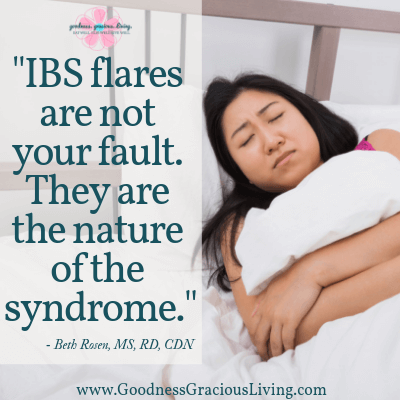
The bottom line is this: IBS flares are not your fault. They are the nature of the syndrome. Show yourself some belly love when you need it and know that this too (aka the flare) shall pass.
Take charge of your IBS care and get the support you need to become symptom-free. If you are looking to incorporate low-FODMAP foods into your diet, you may often have gut health, IBS or SIBO issues. You can take charge of your health: Start by being ready with your gut health story! Download this free template and have all of your gut health information in one place so that your doctors know the whole story, and you can get diagnosed and treated quickly. Click here to grab your copy of my Tell Your IBS Story today!

Beth Rosen
Eating Attitudes™ & Gut Expert
Beth Rosen, MS, RD, CDN is a Registered Dietitian and owner of Beth Rosen Nutrition. She practices a non-diet philosophy and is a Health at Every Size" practitioner. Her goal is to end the pain of diet culture, one person at a time. Beth's techniques and programs empower chronic dieters, and those who consider themselves emotional and /or stress eaters, to ditch the vicious cycle of dieting, eat fearlessly by removing Food and diet rules, and mend their relationship with food and their bodies. Beth's works face-to-face with clients in Southbury, CT, and virtually with clients, worldwide.